Flying Blue Guide Explains Paths to Gold and Platinum
The guide outlines tier requirements and a practical way to collect XP.
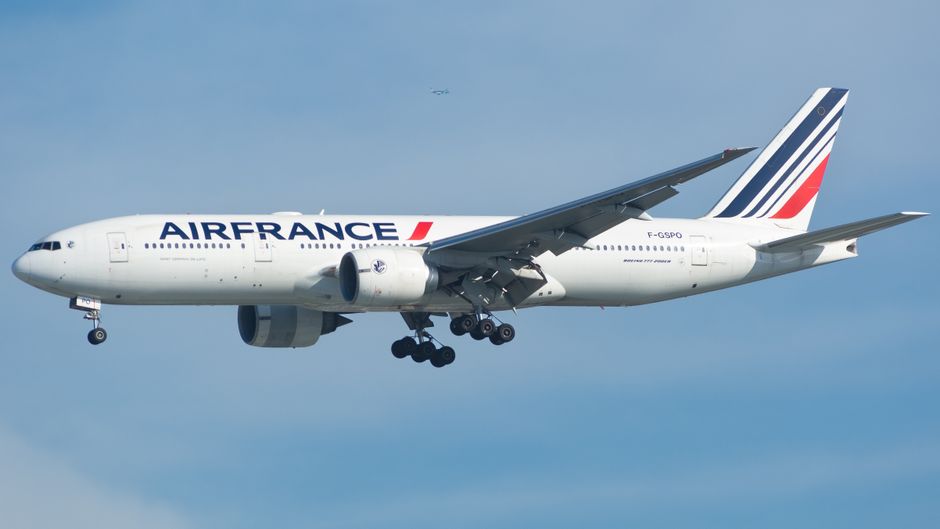
A different kind of status chase
The traveler behind this Flying Blue strategy no longer pursues airline status as enthusiastically as in earlier years. In his view, upgrades have become less dependable, paid premium cabins can offer more reasonable pricing, and most airlines have increased the difficulty of qualifying. He still sees substantial value in airline miles, but considers the benefits of status less consistent than they once were.
Flying Blue has nevertheless held his attention for several years. After qualifying for Platinum and maintaining that level for some time, he developed an approach built around several sources of XP rather than relying entirely on a large volume of Air France or KLM flights. The Air France KLM Visa Signature credit card has grown into an especially significant part of that plan as the program has changed.
XP controls qualification
Flying Blue determines elite standing through XP, an abbreviation for experience points. It does not impose a separate minimum for the number of Air France-KLM segments a member must complete. This creates a relatively simple foundation: status depends on XP rather than a combination of points and flight counts.
The progression between elite levels has some added nuance that can make qualification more manageable. In particular, reaching Platinum does not require collecting all 580 XP during a single year. Members considering Gold or Platinum therefore need to understand how movement through the tiers works, instead of treating Platinum as one flat annual target.
XP may be earned without flying Air France or KLM. Eligible trips on partner carriers can provide the full basis for status, although the rules distinguish between alliance partners: SkyTeam flights can generate XP, while travel with partners outside SkyTeam may earn miles but does not produce XP.
Flying remains the foundation
Air France, KLM and eligible partner flights remain the most direct sources of XP. Awards are calculated for individual segments, so an itinerary’s structure matters alongside the carrier and cabin. Short international journeys are described as the easiest flying-based way to accumulate XP quickly.
That creates flexibility for travelers whose normal routes do not center on Air France-KLM. A member could build status completely from qualifying partner travel. At the same time, someone already booking Air France or KLM can combine the XP from those journeys with non-flight methods, reducing the amount of additional travel needed solely for elite qualification.
The card adds substantial XP
The Air France KLM Visa Signature credit card is offered in the United States and can make a material contribution toward status. A new cardholder may receive as many as 100 XP after signing up. In subsequent years, the card can supply a maximum of 160 XP annually.
For a traveler who already holds Platinum, the recurring card opportunity alone covers more than half of the XP needed to renew that standing. That makes the card particularly useful as a steady qualification tool, with flying and other XP options available to close the remaining distance.
Fuel and donations offer alternatives
Flying Blue also grants XP when members buy sustainable aviation fuel, purchase carbon offsets or support charity. Sustainable aviation fuel can generally be added when buying a ticket, including an award reservation. One example uses a business-class award between New York (JFK) and Paris (CDG): spending $899.90 on sustainable aviation fuel would yield 84 XP. As a broad guide, this route to XP costs roughly €10 per point.
Charitable contributions provide a travel-independent option. Every donation of 2,000 miles earns one XP, and members can choose among numerous charities. Together, these alternatives allow a member to supplement flight activity instead of planning every qualification point around another trip.
The overall strategy is therefore a blend: collect XP from suitable flights, use the co-branded card for a sizeable recurring contribution, and consider fuel purchases, offsets or donations when additional points are useful. For travelers targeting Gold or Platinum, the central planning task is matching those channels to their place in Flying Blue’s tier progression.
- Platinum does not require earning 580 XP within one year.
- A new cardholder can earn up to 100 XP.
- The card can provide up to 160 XP each year.
- An $899.90 fuel purchase on the cited award earns 84 XP.
- Donating 2,000 miles earns one XP.
Summarized from the reporting above. Read it for the full story.
Winter weeks, altitude, and a fire at the end of the day. Tell us what the trip should feel like and we'll shape complete options you can compare.
Ask 4Vacations →
Share this story