Vets Warn Dogs Should Barely Go Outside Below a Set Temperature
Veterinarians say a temperature threshold changes how long dogs should spend outdoors.

Cold limits for every dog
A winter walk that feels merely brisk to a person can expose a dog to several hazards. Fur does not guarantee adequate protection, and cold conditions may contribute to hypothermia, frostbite and damaged paw pads. The safest amount of outdoor time depends on the individual animal, but veterinarians identify two temperatures that should change every owner’s routine.
At 32 degrees Fahrenheit and colder, Dr. Aly Cohen advises reducing the time all dogs spend outdoors. Once temperatures fall below 20 degrees Fahrenheit, outings should be restricted to quick bathroom trips. Those limits apply even to breeds commonly viewed as comfortable in winter, because cold tolerance differs widely among dogs.
Some dogs chill sooner
Breed and body size are only part of the calculation. Coat density, age and general health also affect a dog’s ability to maintain body heat. A chihuahua and a husky may respond very differently to the same conditions, while a dog unfamiliar with cold weather can be more vulnerable during an abrupt temperature drop than one regularly exposed to freezing conditions.
Discomfort can begin before the thermometer reaches freezing. Between about 45 and 32 degrees Fahrenheit, owners may notice a dog shivering, whining, stopping or refusing to continue walking, or holding its tail tucked. These behaviors are practical signals to shorten the outing and get the animal warm.
Small dogs with sparse or short coats shed body heat rapidly. Puppies are also at greater risk because efficient temperature regulation has not fully developed. Senior dogs may have less muscle and a slower metabolism, both of which can make staying warm more difficult. Cold tolerance can also be particularly poor in dogs affected by Cushing’s disease, endocrine disorders, kidney disease or heart disease, according to veterinarians Dr. Cohen and Dr. Hannah Hart of Chewy.
Sidewalk chemicals add danger
Temperature is not the only winter concern. Rock salt and ice-melting crystals may be spread across sidewalks, roads, driveways and parking areas. These products can appear white, clear or blue and commonly contain sodium chloride along with other minerals. Dogs may swallow the material directly or ingest residue later while cleaning their paws.
Consuming too much can cause dehydration, kidney problems or salt poisoning. Warning signs include diarrhea, vomiting, lethargy, drooling, tremors, confusion and seizures. Exposure does not have to involve swallowing: direct contact may inflame paw pads and lead to redness, persistent licking, sores that break the skin or infection.
At home, owners can choose de-icing products marketed as pet-safe. Such formulas generally replace sodium chloride with ingredients including magnesium chloride or urea. They are considered less irritating, rather than harmless, and sensitive dogs may still react. Owners should therefore keep dogs from licking their paws after walking across treated ground.
Warmth should match the dog
A coat is not automatically necessary for every animal. Dogs that stay highly active and create substantial body heat through running or play may remain comfortable without extra insulation. The dogs most likely to benefit are small breeds, short-furred animals such as greyhounds and chihuahuas, and dogs whose age or health has left them with thinner skin.
Large dogs with heavy coats may still benefit from a lightweight water-resistant covering. Its purpose is to help them remain dry when snow or freezing rain is falling. Clothing should be chosen according to the dog’s build, activity and vulnerability rather than on breed reputation alone.
A practical winter routine
Safe winter care rests on protecting both body temperature and feet. Check the weather before leaving, use the 32-degree point as a reason to reduce exposure, and treat anything under 20 degrees as bathroom-break-only conditions. During less severe cold, the dog’s behavior should determine whether an outing ends early.
After any walk over treated pavement, prevent paw licking and look for irritation. Extra insulation can help dogs that lose heat easily, while a water-resistant layer may protect even heavily coated animals from becoming wet. Taken together, shorter outings, attention to discomfort and careful paw care address the main cold-weather risks identified by the veterinarians.
- At 32 degrees Fahrenheit or below, limit outdoor time for every dog.
- Below 20 degrees Fahrenheit, allow only very brief bathroom breaks.
- Discomfort may appear between roughly 45 and 32 degrees Fahrenheit.
- Pet-safe de-icers are less irritating, but they are not risk-free.
- Prevent dogs from licking their paws after contact with de-icers.
Summarized from the reporting above. Read it for the full story.
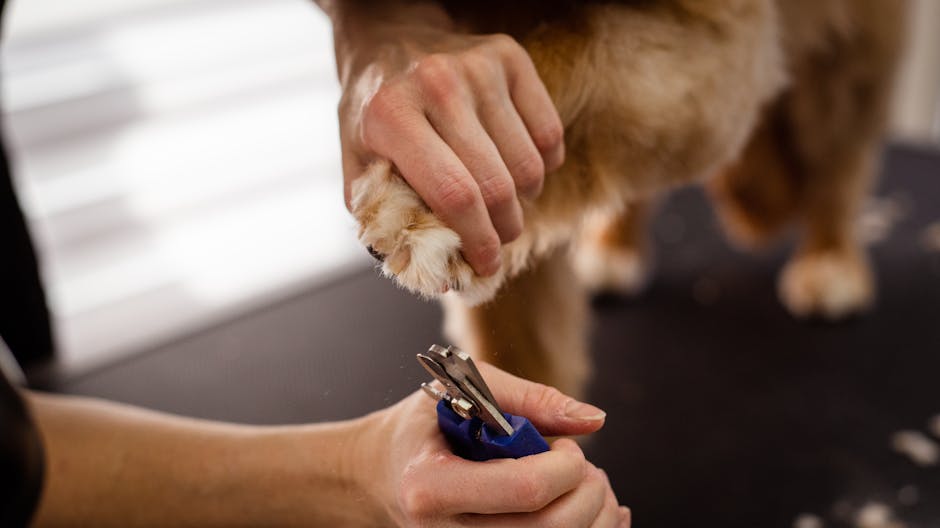
Walk your dog or cat in on the first Saturday morning of any month, no appointment. We'll trim nails while you wait, no charge.
Walk in with your dog or cat, no appointment and no charge.
See the schedule →


Share this story