IndiGo A321neo Diverts to Hyderabad After Power Bank Fire
The device ignited in an overhead bin during a Delhi-to-Chennai flight, with no injuries reported.
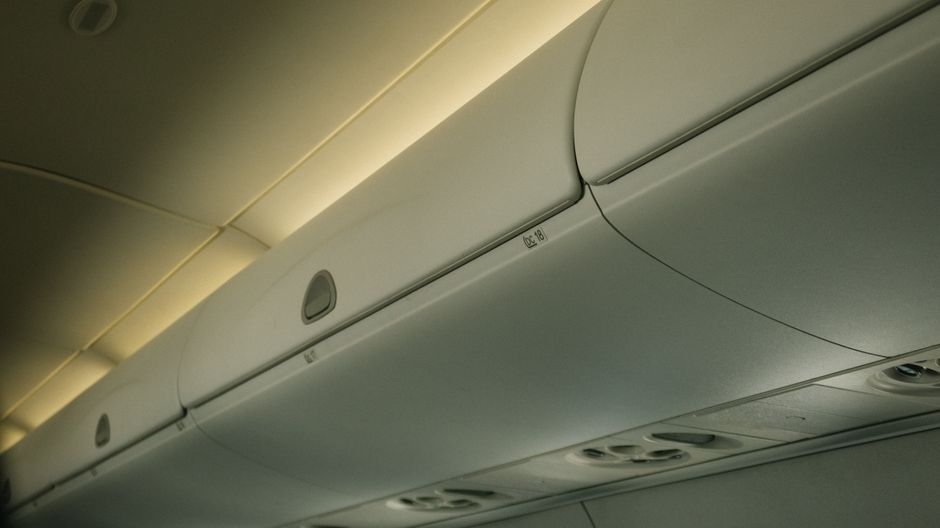
Fire forces a diversion
IndiGo’s flight 6E 6115 changed course during its journey from Delhi to Chennai after a traveler’s portable battery caught fire in a cabin storage compartment. The Airbus A321neo had left Delhi Indira Gandhi International Airport and was bound for Chennai International Airport when the emergency developed on Sunday. Instead of continuing south to its scheduled arrival, the pilots descended toward Hyderabad and landed at Rajiv Gandhi International Airport.
Video from inside the aircraft spread widely after the incident. It showed travelers trying to keep the flames from extending beyond the affected area while other people were moved farther away. Despite the smoke, heat and alarm inside the cabin, the aircraft reached the ground safely. No one aboard was reported injured.
Passengers continue to Chennai
Once the diversion was complete, IndiGo organized a replacement aircraft for the remaining trip to Chennai. That allowed the passengers, who had escaped the fire without injury, to resume their journey soon after the emergency landing rather than remain stranded in Hyderabad.
The airline identified the service as 6E 6115 and said it was operating between Delhi and Chennai on October 11, 2026. Its account described smoke coming from a customer’s electronic device, followed by a prompt response from the cabin crew that brought the immediate danger under control. The substitute plane was then prepared to carry the travelers onward to their intended destination.
Device broke baggage rules
The burning battery had been placed somewhere IndiGo’s policy does not permit. Backup charging devices must remain in a traveler’s carry-on baggage, where they can be reached if they begin overheating. The same restriction applies to lithium batteries that are loose or carried as spares. Neither checked luggage nor the compartments above passenger seats are approved storage locations for these items under the airline’s rules.
An investigation will examine why the defective device failed and determine how much harm the fire caused to the airplane. The aircraft involved carries tail number VT-NOE. That review will cover both the precise origin of the incident and the complete extent of any resulting damage.
Why battery fires escalate
A failure of this kind can develop through thermal runaway, a chemical chain reaction within a lithium-ion battery. The process produces both intense heat and its own oxygen, distinguishing it from an ordinary fire. Temperatures may rise beyond 600°C, equivalent to 1,112°F. As one cell overheats, nearby cells can split apart and explode in sequence, producing a concentrated, torch-like flame.
Anything packed close to the device can then become additional fuel. Clothing, luggage and nylon bags are all vulnerable to ignition. Suppressing the visible flame may not end the threat because the reaction can keep progressing within the battery. A device that appears extinguished can ignite again several minutes later, making continued monitoring essential during an airborne emergency.
Cabin smoke and fumes demand a high-priority aviation response. Portable consumer electronics have also become more powerful and complicated, while backup batteries have grown larger. Improper passenger handling of those devices has consequently created a greater hazard in recent years. Earlier onboard fire events were more commonly associated with an aircraft’s electrical equipment or, in the gravest cases, an engine.
Storage changes the danger
Where a failing battery is kept affects how quickly the danger can be found and contained. A device burning in the cargo area may remain unnoticed longer, delaying the crew’s response while the fire expands. That detection problem is one reason such batteries cannot travel inside checked bags.
An overhead compartment creates a different threat. Its enclosed space holds in heat and thick smoke, allowing nearby belongings to catch fire faster. Flames may also smolder behind the closed door for crucial minutes. As pressure accumulates, the compartment can eventually burst open and release a sudden wave of fire into the passenger cabin. Keeping a power bank accessible in hand baggage gives the crew a better chance to spot overheating and intervene before the failure reaches that stage.
- Flight 6E 6115 diverted to Hyderabad on October 11, 2026.
- No injuries were reported after the Airbus A321neo landed safely.
- IndiGo arranged another aircraft for the remaining journey to Chennai.
- Portable backup batteries must stay in hand baggage, not overhead compartments or checked luggage.
- Investigators will assess the cause and damage to VT-NOE.
Summarized from the reporting above. Read it for the full story.
Winter weeks, altitude, and a fire at the end of the day. Tell us what the trip should feel like and we'll shape complete options you can compare.
Ask 4Vacations →
Share this story