Five Caribbean Islands Carry the State Department’s Lowest Advisory
Grand Cayman, Curaçao, the British Virgin Islands, Anguilla and St. Barts make the list.
What Level 1 means
For travelers weighing a Caribbean escape this winter, these five destinations share an important distinction: the U.S. State Department places each at Level 1, its lowest advisory category. The guidance is to take ordinary precautions. That rating puts Grand Cayman, Curacao, the British Virgin Islands, Anguilla and St. Barts among a relatively small group of destinations receiving the agency’s lowest security designation.
A Level 1 rating does not make every island experience identical. The five choices range from a developed financial center to a sailing-oriented archipelago and deliberately low-density beach destinations. Their transportation, landscapes and visitor economies create notably different vacations, even though the same advisory level applies across the group. Choosing among them depends less on the rating itself and more on how travelers want to spend their time once they arrive.
Grand Cayman and Curacao
Grand Cayman belongs to a British Overseas Territory that also includes Cayman Brac and Little Cayman. Its role as an international banking center has helped support paved roads, strong infrastructure and a tightly controlled tourism sector. Arriving in George Town places visitors in a polished setting where renting a car, exploring inland areas or taking an evening beach walk can fit naturally into the trip.
Curacao offers a more urban and culturally focused experience. It is one of the ABC Islands with Aruba and Bonaire, and its position beyond the Atlantic hurricane belt has spared it from a continual pattern of storm damage and reconstruction. That geography has contributed to economic stability and an environment accustomed to welcoming visitors.
In Willemstad, the Queen Emma pontoon bridge and the vividly colored Dutch colonial buildings along the Handelskade create the island’s most recognizable cityscape. The capital is suitable for exploring on foot, while a drive toward Curacao’s western side opens access to rougher coves. Visitors can also move beyond resort grounds to eat at neighborhood sneks and spend time within the local community.
Life across the BVI
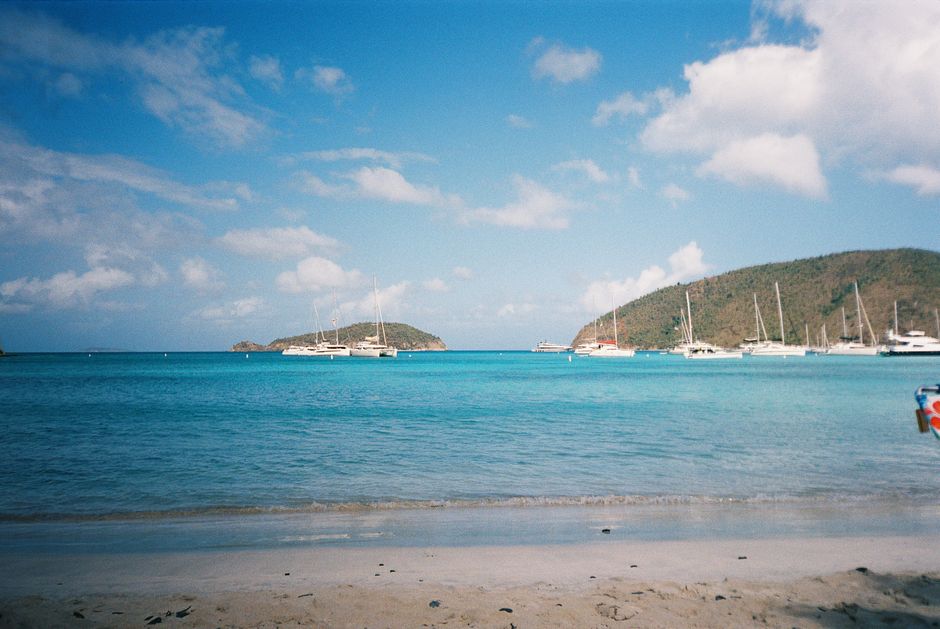
The British Virgin Islands suit travelers who want the sea to define most of the journey. This volcanic group contains more than 50 islands and cays, with Tortola, Virgin Gorda and Jost Van Dyke serving as its principal centers. Rather than concentrating visitors in one large resort district, the destination spreads activity across waterways and smaller island communities.
Yacht charters and trips between islands are central to the tourism economy. A typical rhythm involves anchoring in clear channels, using a dinghy to reach land and visiting close-knit communities along the way. Crowded streets and large tourist attractions play a smaller role than they do in more densely developed destinations. The result is a relaxed maritime setting built around boating, time on the water and movement from one island to another.
Lower density escapes
Anguilla has taken a deliberate approach to limiting mass tourism. The narrow coral-and-limestone island lies north of St. Maarten, and its government has historically prevented large cruise ships from docking while sharply restricting mega-resort construction. Those policies have preserved a lightly developed atmosphere with fewer visitors concentrated in any one place.
The experience centers on quiet sandy roads, secluded coastlines, open-air beach shacks and upscale dining with a relaxed style. Local residents and travelers mix in settings that are smaller and less hectic than the busy tourism strips found elsewhere in the Caribbean. For visitors who value space and calm over large entertainment complexes, those development choices are a defining part of Anguilla’s appeal.
St. Barts presents a different version of exclusivity, shaped by luxury rather than Anguilla’s understated character. Part of the French West Indies, it combines steep, dramatic Caribbean terrain with a polished atmosphere associated with the South of France. Among these five Level 1 destinations, it stands out for a sophisticated style layered onto a striking island landscape. Together, Anguilla and St. Barts show how limited-density Caribbean travel can take two distinct forms: one quiet and restrained, the other notably refined.
- All five destinations carry the U.S. State Department’s Level 1 advisory.
- The British Virgin Islands comprise more than 50 islands and cays.
- Tortola, Virgin Gorda and Jost Van Dyke are the BVI’s main hubs.
- Grand Cayman belongs with Cayman Brac and Little Cayman.
- Anguilla historically restricted mega-resorts and large cruise ships.
Source: Travel Off Path ↗
Summarized from the reporting above. Read it for the full story.
Winter weeks, altitude, and a fire at the end of the day. Tell us what the trip should feel like and we'll shape complete options you can compare.
Ask 4Vacations →


Share this story