TSA Keeps 3-1-1 Liquids Rule at U.S. Checkpoints
The rule remains in place in 2026, even as the TSA makes changes.
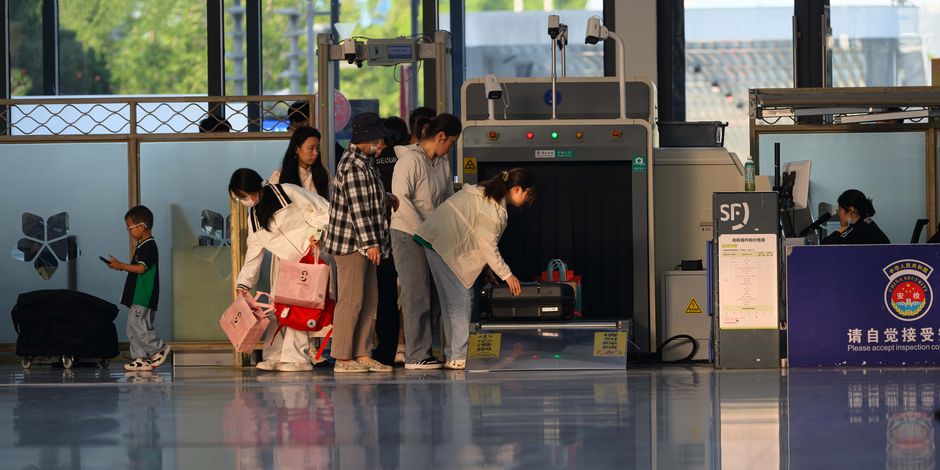
The limit still applies
Travelers passing through airport security in the United States during 2026 must continue following the TSA’s existing limits for liquids, gels and aerosols. Despite speculation that newer equipment had already changed checkpoint policy, the national restriction remains active.
Each passenger may bring one transparent plastic bag with a capacity of one quart. That bag may contain three liquid containers meeting the volume requirement, and each container is capped at 3.4 ounces, equivalent to 100 ml. The familiar 3-1-1 label is therefore more than a memory aid: it still defines how much can pass through the checkpoint under the standard procedure.
The arrival of newer scanners at some airports does not create a general exemption. Travelers moving through an upgraded checkpoint remain subject to the same packing limits because the technology has not been installed throughout the entire airport system.
Why the rule began
The restriction dates to August 2006. Older X-ray equipment could not reliably distinguish ordinary drinks and personal-care products from unstable ingredients that could be used in liquid explosives. TSA introduced the policy after intelligence in the United Kingdom disrupted a plan involving transatlantic aircraft and explosives concealed in soda cans.
Liquids were initially prohibited completely. On September 26 of that year, the policy shifted to a system allowing small bottles inside a quart-size bag. The permitted container size subsequently moved from three ounces to 3.4 ounces, bringing it into line with the international measurement of 100 milliliters.
Although the restriction has changed since its introduction, further revisions depend on screening equipment that can identify fluids dependably. That technological requirement remains the central reason the existing national limit continues.
What newer scanners can do
Computed Tomography scanners provide security officers with considerably more information than older two-dimensional machines. Their software can assess the density of a liquid and flag dangerous material even when it sits far inside a packed bag. Officers can also turn the luggage image through 360 degrees and examine its overlapping internal layers.
That capability has already supported different rules elsewhere. Certain airports in the UK and Europe permit liquid containers holding as much as two liters. The United States has not adopted a comparable nationwide change because CT screening is not yet available at every airport.
By late 2026, more than 1,100 CT machines, each costing millions of dollars, had been placed across 300 large domestic airports. Yet roughly one-third of the network remained without the upgrade. Hundreds of smaller regional screening lanes were still relying entirely on older 2D X-ray systems.
Why one standard remains
TSA intends to keep the 3.4-ounce ceiling until CT equipment reaches every airport. A uniform rule prevents a security difference between locations with modern scanners and those using legacy machinery. It also reduces the chance that passengers will encounter conflicting instructions while traveling between upgraded and non-upgraded airports.
Once the same scanning capability is operating across the country, a revised liquids policy is expected. Until that deployment is complete, the presence of CT equipment at an individual airport should not be interpreted as permission to carry larger containers.
For travelers, the practical approach remains unchanged: prepare liquids according to the national rule for every U.S. checkpoint, regardless of the equipment visible in a particular security lane.
How rumors took hold
Confusion intensified after the Department of Homeland Security discontinued routine shoe removal for passengers on July 8, 2025. The abrupt end of that two-decade checkpoint practice encouraged expectations that other long-standing screening requirements might soon disappear as well.
Eight days afterward, then-Secretary Kristi Noem discussed the liquids policy during a conference organized by The Hill. Her suggestion that larger permitted container volumes could become the next major announcement was widely treated as a sign that change was close. However, she did not provide a deployment schedule or operational details for replacing the 3-1-1 framework.
Those comments, combined with the visible spread of CT scanners, helped create the impression that the restriction had already ended. The technology may eventually support a different system, but in 2026 the established container and bag limits continue to govern U.S. checkpoints.
- Each liquid container remains limited to 3.4 ounces or 100 ml.
- Each traveler may use one clear, quart-sized plastic bag.
- More than 1,100 CT units serve 300 major domestic airports.
- The rule remains until CT scanners reach every U.S. airport.
Source: Simple Flying ↗
Summarized from the reporting above. Read it for the full story.
Winter weeks, altitude, and a fire at the end of the day. Tell us what the trip should feel like and we'll shape complete options you can compare.
Ask 4Vacations →


Share this story