Affordable Family Travel Rules, Illustrated
Mona Chalabi brings travel advice from well-traveled parents to life.
Money Behind the Journey
Mona Chalabi frames affordable family travel through the contradictions she noticed after moving to the US in March 2014. Her first Thanksgiving came later that year, when a friend invited her to a dinner for 12 in Connecticut. The gathering exposed a sharp difference between her friend’s crowded Brooklyn apartment and the considerable family wealth that surfaced during a conversation over the dishes.
That experience shaped Chalabi’s view of a holiday that appears less commercial than celebrations centered on presents or candy, yet begins an exceptionally busy stretch for travel. Families spend heavily to gather, take vacations, and experience places beyond their normal routines. With money at the center of those decisions, she presents each parent’s contribution as both practical guidance and a revealing personal account.
The result connects budgets with the circumstances behind them. Chalabi, a Pulitzer Prize-winning writer and illustrator who has also written a book about class, is interested in what travel choices reveal about wealth. The parents contributing ideas do not all occupy the same financial position, but their experiences offer tested ways to make a family trip more manageable.
Small Adventures Without Splurging
The examples stretch across very different settings. Families can search for inexpensive discoveries in New York City’s Chinatown, watch street entertainment at no charge in Oaxaca, or enjoy public transportation across Europe. The common thread is finding experiences in ordinary parts of a destination instead of assuming that memorable family activities must come with premium prices.
These ideas also treat children’s needs as part of the itinerary. A market, convenience store, city bus, or walk through a neighborhood can become an experience rather than merely a logistical stop. That approach allows parents to spend selectively while giving children direct contact with the rhythms, food, and movement of a place.
Snacks as a Travel Tool
Dana Kravis, global executive director of CNT video, puts snacks at the center of her parenting strategy. Food can occupy children, improve their mood, and introduce them to local culture. She recommends visiting a farmers market at the beginning of a trip. When the destination feels especially unfamiliar, a convenience store can offer a useful mix of recognizable and new choices; her example is a 7-Eleven in Tokyo.
A hotel refrigerator makes pre-cut fruit practical. Without one, parents can choose fruit that keeps at room temperature, including apples, bananas, and clementines. Kravis carries a light backpack and restocks it every morning. The habit gives the family a ready supply throughout the day and helps reduce hunger-driven meltdowns, even if it cannot prevent every one. It is a modest routine with several uses: nourishment, entertainment, emotional rescue, and a low-pressure way for children to encounter local food.
Turn Transit Into Entertainment
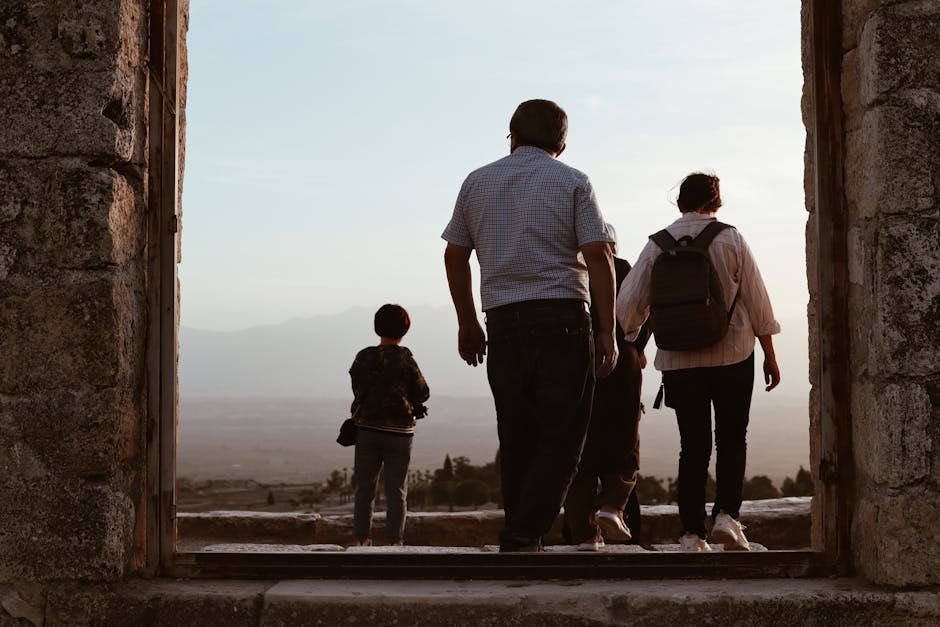
Photographer Tanveer Badal found another budget-conscious tactic during a London stay last December. His family rented an Airbnb in Primrose Hill and explored neighborhoods by walking. His children, who were eight and three at the time, eventually tired, so the family boarded a double-decker bus and went upstairs in search of seats at the front.
The ride back became an attraction of its own. From the upper level, the children could take in Christmas lights, active streets, and broad views, while Badal enjoyed the photographic perspective. The family gained an experience from transportation they already needed rather than buying a separate sightseeing ride.
London limits the total daily cost of bus journeys when a passenger consistently taps with one card or one phone, while riders younger than 11 pay nothing. Badal’s family has applied the same general idea in Singapore. Their practice is to pass on a sightseeing tour or Uber and let local transit become part of the day’s adventure.
A Flexible Family Mindset
Together, the parents’ suggestions favor routines that serve more than one purpose. Walking provides transportation and neighborhood exploration. A regular bus can deliver both a journey and elevated city views. Stocking a backpack prevents hunger while creating opportunities to sample food found locally. Free street performances and affordable neighborhood discoveries can supply entertainment without requiring an elaborate booking.
The larger lesson is not a single formula for every destination. It is a way of noticing what is already available: the food shops families pass, the public vehicles residents use, the streets they walk, and the performances unfolding around them. Chalabi’s illustrations bring those road-tested choices together while keeping the financial realities of family travel visible.
- London bus fares are capped daily when one card or phone is used consistently.
- Children under 11 can ride London buses free.
- Pack apples, bananas, or clementines when refrigeration is unavailable.
- Visit a farmers market early in the trip to stock up on snacks.
Source: Condé Nast Traveler ↗
Summarized from the reporting above. Read it for the full story.
Winter weeks, altitude, and a fire at the end of the day. Tell us what the trip should feel like and we'll shape complete options you can compare.
Ask 4Vacations →

Share this story