Emirates, Qatar Airways and Etihad Business Class Compared
The three Middle Eastern airlines are described as close rivals.
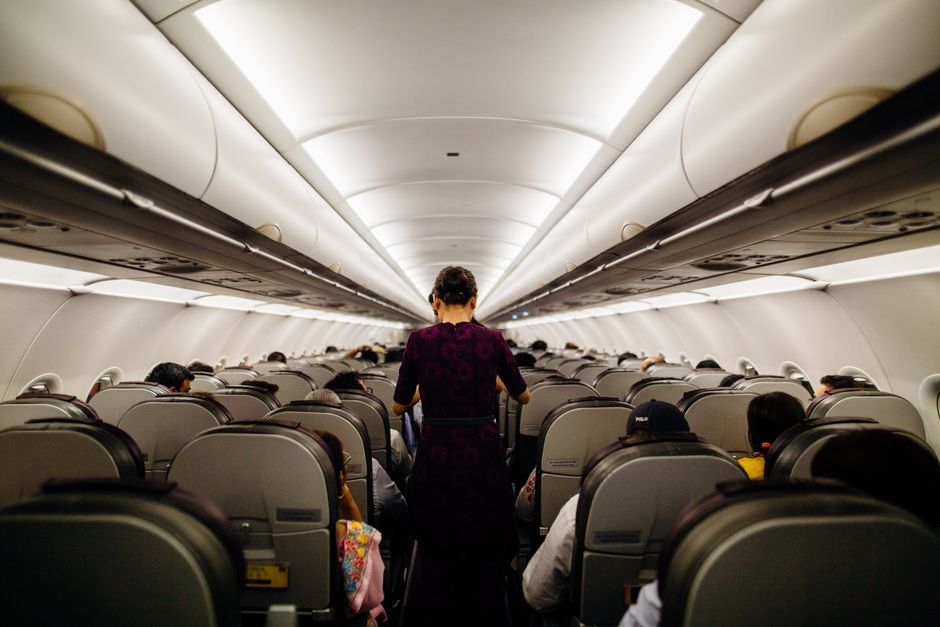
Three different approaches
Emirates, Qatar Airways and Etihad Airways compete in a Middle Eastern premium market where business class can rank among the industry’s strongest offerings. Yet choosing among them is not simply a matter of airline reputation. The experience may change considerably with the aircraft assigned to a flight, making the cabin layout and installed seat especially important at booking time.
All three carriers serve a broad mix of passengers, and connecting travelers have become an increasingly significant part of their business models. Their competing strengths can be assessed through the seat itself, onboard service and airport experience. Qatar Airways emphasizes adaptable privacy, Emirates combines a large network with polished amenities, and Etihad presents a quieter, more boutique-style proposition.
Qatar prioritizes privacy
Qatar Airways builds its premium cabin around privacy, flexibility and rest on long journeys, particularly overnight. Its signature Qsuite has a closing door, mood lighting, a bed that becomes fully flat and a Do Not Disturb indicator for passengers who want uninterrupted sleep. The cabin combines seats facing toward the front with others facing the rear.
The center section can also be transformed in an unusual way. Four seats may open into a shared area where a group can eat or talk together, while passengers traveling alone can still maintain substantial privacy. A turndown service adds a mattress and soft bedding. On lengthy and ultra-long journeys, sleepwear comes from The White Company, based in London, while Diptyque supplies amenity kits on certain routes.
Meal timing is another point of flexibility. Business-class travelers may choose from an à la carte selection when they are ready to eat, rather than following a fixed serving schedule. That can be useful for passengers who would rather work, sleep or adjust their meals around a different time zone. At Doha Hamad International Airport (DOH), eligible customers can use the Al Mourjan Business Lounge.
Aircraft choice matters
Qsuite is not installed across every Qatar Airways route, so the airline’s seats can differ substantially between aircraft. Even a carefully selected flight may change if the scheduled plane is replaced close to departure. Checking the seat map before travel can therefore help passengers understand which cabin they are likely to receive.
Emirates faces a similar consistency issue. Its best-known business-class setting is the Airbus A380, whose flat-bed seats use a 1-2-1 arrangement that gives every passenger a direct path to the aisle. At the rear of the upper level, a bar and lounge provide room to stand, have a drink and take a break from remaining seated throughout a long flight.
The experience can be different on Boeing 777 aircraft. Emirates is working through an upgrade that will bring refurbished Boeing 777s into a contemporary 1-2-1 configuration. That change moves away from the older 2-3-2 design, a layout many travelers have sought to avoid. Until the transition is complete, passengers comparing Emirates flights need to look beyond the airline name and identify the scheduled aircraft.
Emirates adds scale
Beyond its seating, Emirates draws on the breadth of its network, refined cabin presentation and a substantial entertainment offering. Catering is supported by a wide beverage selection, while ICE provides as many as 6,500 on-demand channels. The Airbus A380 lounge also gives its premium experience a social element that differs from a cabin designed solely around enclosure and sleep.
These features make Emirates attractive to travelers who value entertainment and space to move around, but the variation among aircraft remains the central caveat. The refurbished Boeing 777 program should narrow that gap by replacing an older arrangement with direct aisle access for each seat.
Etihad takes a calmer route
Etihad distinguishes itself through a more intimate atmosphere. On the A350, its business studios include doors that slide shut and beds that extend fully flat. The design seeks to pair personal privacy with a cabin that feels calmer than a larger, more overtly social premium environment.
The practical choice among the three carriers depends on the traveler and the exact plane. Solo passengers may place the greatest weight on an enclosed seat and direct aisle access. Groups or couples may appreciate Qatar Airways’ configurable center seats, while those drawn to a shared lounge and extensive entertainment may favor the Emirates Airbus A380. Etihad’s A350 offers another path for travelers who prefer privacy within a quieter setting. In every case, confirming the aircraft and seat map is essential because the airline’s headline product may not appear on every flight.
- Qsuite is available only on selected routes and may change after an aircraft swap.
- Emirates is introducing refurbished Boeing 777 cabins with a 1-2-1 layout.
- The Emirates Airbus A380 includes an upper-deck bar and lounge.
- ICE offers up to 6,500 on-demand entertainment channels.
- Etihad A350 business studios have sliding doors and fully flat beds.
Summarized from the reporting above. Read it for the full story.
Winter weeks, altitude, and a fire at the end of the day. Tell us what the trip should feel like and we'll shape complete options you can compare.
Ask 4Vacations →
Share this story