Helping Dogs Feel Safer Around Unfamiliar People
Anxious behavior around new people is common in dogs.

Recognizing a fearful response
A dog who struggles around unfamiliar people may communicate distress in several ways. Some stay close to their owners or hide behind their legs. Others lower or tuck their tails, pull back their ears, whine, tremble, or attempt to leave. Barking and growling can also be signs of discomfort rather than deliberate misbehavior.
Watch for quieter physical signals as well. An anxious dog may pant despite comfortable temperatures or show the whites of the eyes. Recognizing these behaviors as expressions of fear can help an owner respond with patience instead of treating the dog as though it has done something wrong. The important message behind all of these reactions is that the dog does not feel safe.
Why strangers can feel frightening
Fear of unfamiliar faces can have more than one origin. Early socialization plays an important role: puppies that encounter only a limited range of people during their first months may become uneasy with strangers as they grow. A troubling previous experience can also shape later reactions to people the dog does not know.
Temperament matters too. Some dogs are naturally more cautious or sensitive, even without a specific bad encounter. Understanding the possible basis for the reaction gives the household a starting point for providing support. Whatever the reason, the behavior should be approached as anxiety that needs compassionate handling, not stubbornness that must be overcome through pressure.
Build safety into daily life
A dependable routine can make daily life feel more predictable. Meals offered at consistent times, walks kept on a regular schedule, and steady training practices may reduce anxiety. When a dog can anticipate familiar parts of the day, encounters with new people may be easier to manage.
A private retreat is another useful form of support. A crate placed in a quiet area and furnished with comfortable bedding can give the dog somewhere secure to go when visitors arrive. Familiarity with the crate matters: a dog that already associates it with rest and safety may settle more readily when activity in the home becomes overwhelming. The retreat should remain an option the dog can use instead of being compelled to socialize.
Make introductions gradual
Do not push a nervous dog into contact with a stranger. Forcing an interaction can deepen the fear and may contribute to aggression. Allow the dog to decide when to move closer. If it chooses to approach, treats and praise can connect that decision with a pleasant outcome.
Counter-conditioning uses the same positive association more deliberately. When an unfamiliar person appears, the dog receives something especially enjoyable, such as a tasty treat. Begin far enough away that the dog still feels secure. As confidence develops, the distance can be reduced little by little. This gradual process is intended to change the dog’s emotional response, so the presence of a stranger begins to predict something welcome rather than something threatening.
Visitors can make the experience less intimidating through their own behavior. Ask them to avoid staring directly at the dog and reaching down over its head. They should wait for the dog to initiate contact. It may also help for a guest to sit before the dog comes into the room, reducing the imposing effect that a standing person can have.
Know when to seek help
Improvement requires time, compassion, and attention to the dog’s comfort level. Progress may come in small steps, and those steps are worth recognizing. Fear around strangers is unlikely to disappear simply because it is ignored, so patient support and repeated positive experiences are important.
Professional guidance is appropriate when the anxiety is severe or basic measures are not producing progress. A veterinarian or qualified trainer can help develop an individualized approach. A certified trainer who uses fear-free methods may also assist, while a veterinary behaviorist can recommend further support in some cases. Owners should consult their veterinarian for advice suited to their individual dog.
- Never compel a fearful dog to meet a stranger.
- Start exposure at a distance where the dog feels secure.
- Ask visitors to avoid direct staring and overhead reaching.
- Seek professional guidance for severe or persistent anxiety.
Source: Animal Wellness Magazine ↗
Summarized from the reporting above. Read it for the full story.
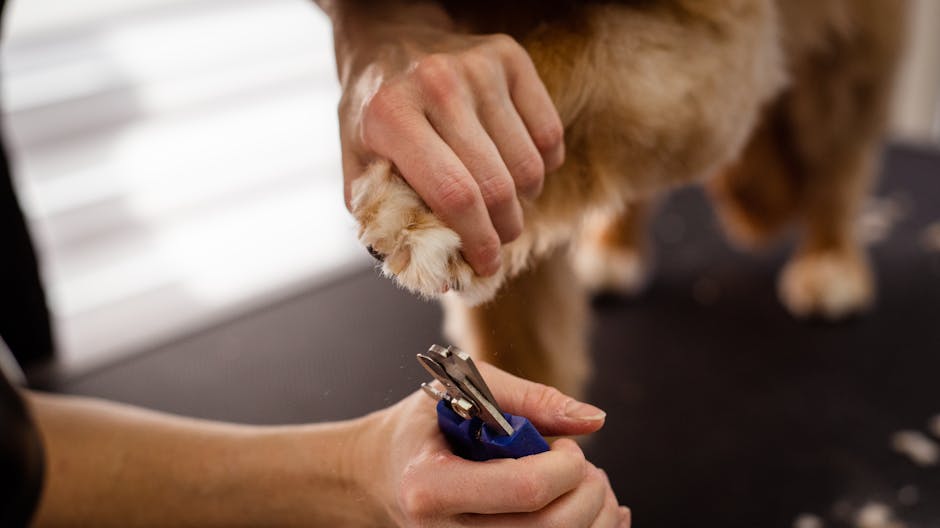
Walk your dog or cat in on the first Saturday morning of any month, no appointment. We'll trim nails while you wait, no charge.
Walk in with your dog or cat, no appointment and no charge.
See the schedule →


Share this story