Why Economy May Beat Premium on Overnight Flights
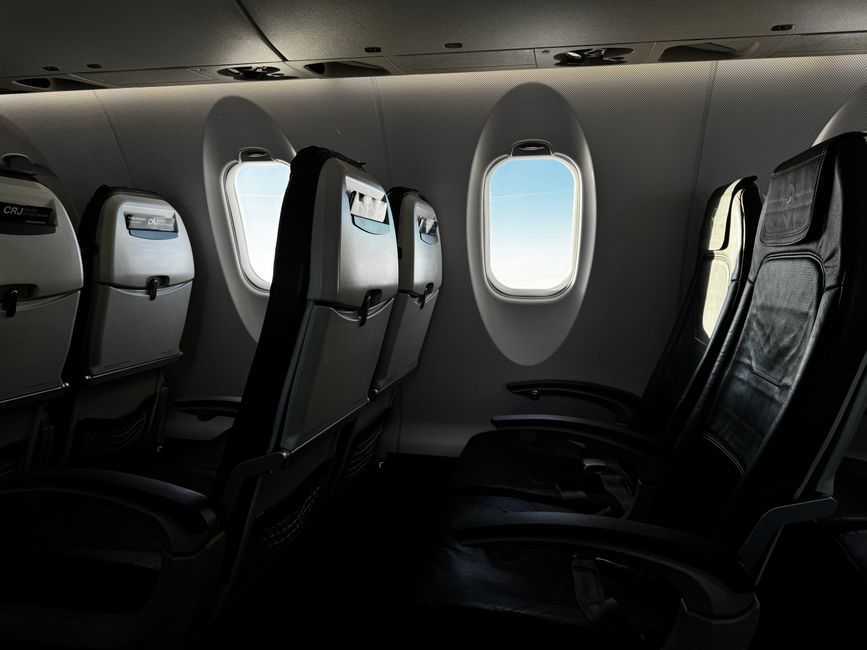
An empty row in economy can offer more room to sleep than premium economy’s fixed armrests.
A Different Cabin Choice
An overnight Air France journey prompted a simple question: can economy sometimes be a better place to sleep than premium economy? The answer depended less on the cabin label than on whether the traveler could find enough room to change position during the flight.
The traveler had considered paying $420 at online check-in to move from economy, but kept the original booking for the overnight trip. That decision later seemed worthwhile. The return journey took place during the day, when upgrading would have been more appealing, but the night flight exposed a problem with premium economy’s design.
Why Armrests Matter
Premium economy offers extra recline and a leg rest, but those features do not solve every sleeping problem. In some aircraft cabins, the armrests are fixed because tray tables are built into them. That creates a solid barrier between the passenger and the neighboring seat.
For someone who cannot sleep comfortably upright or on their back, the restriction is significant. The fixed structure makes it difficult to turn or curl up, leaving the passenger largely confined to a straight-ahead position. Even more space in front of the seat may not help if the body cannot use the space beside it.
The same partitions also remove an option available in economy: stretching across multiple seats when a row remains vacant. Premium economy may provide a more substantial individual seat, but its fixed boundaries remain in place even when other seats in the cabin are unused.
The Economy Gamble
Economy does not promise an empty row. It does, however, leave open the possibility that a traveler can move into an unoccupied seat or make use of several seats together. That possibility became the central advantage during this Air France flight.
The traveler had Flying Blue Gold status, also called SkyTeam Elite Plus, and could select any economy seat on the Boeing 777-200ER without paying from 72 hours before departure. Several options appeared attractive, including an unoccupied exit-row seat and the only three-seat row with an empty middle position.
The empty exit-row seat was rejected because its fixed partition would create a limitation similar to the one found in premium economy. Rows of four with vacant middle seats were also avoided, since other passengers could take those places before departure. A window seat was especially valuable because the window or fuselage offered support for resting the head while sleeping upright.
What Happened After Boarding
Once boarding was complete, the middle seat beside the traveler was still vacant. Three seats were also open in the middle of row 25, one row ahead. Moving there could have created two separate groups of three empty seats, but the aisle passenger preferred to remain in place.
The traveler stayed put as well, using the available middle seat and a pillow brought from home. The pillow helped cushion the back against the harder parts of the seat when it was positioned near the fuselage. The result was some sleep, though not especially comfortable.
Later, a visit to the lavatory revealed that passengers in the rear of the economy cabin had found a more favorable arrangement. They were sleeping across four seats, showing how much the experience could change when several neighboring places stayed open.
Comfort Over The Label
The experience did not lead to a blanket rule against premium economy. Emirates’ premium economy was described as a cabin worth choosing because it stands several steps above economy. The point was narrower: on a night flight, the ability to spread out may be more useful than a more expensive seat with fixed boundaries.
A lie-flat seat would have been the preferred solution for the overnight segment, but it was not available on this trip. Between the two cabins that were considered, sleeping curled across two economy seats seemed likely to produce better rest than remaining almost upright in premium economy.
For travelers deciding how to spend their money before an overnight departure, an empty row can therefore be more important than the upgrade itself. Economy involves a risk because the extra seats may disappear, but when they remain available, flexibility can outweigh the premium cabin’s built-in features.
- The online check-in upgrade offer was $420.
- Flying Blue Gold status allowed free economy seat selection from 72 hours before departure.
- The flight used a Boeing 777-200ER.
- Three seats were open in the middle of row 25.
- Some passengers slept across four seats in the rear economy cabin.
Source: One Mile at a Time ↗
Summarized from the reporting above. Read it for the full story.
Winter weeks, altitude, and a fire at the end of the day. Tell us what the trip should feel like and we'll shape complete options you can compare.
Ask 4Vacations →

Share this story