Spacious Business-Class Seats Still Available on Boeing 747s
The 747’s upper deck offers intimate business-class spaces shaped by the aircraft’s cabin layout.

A shrinking passenger fleet
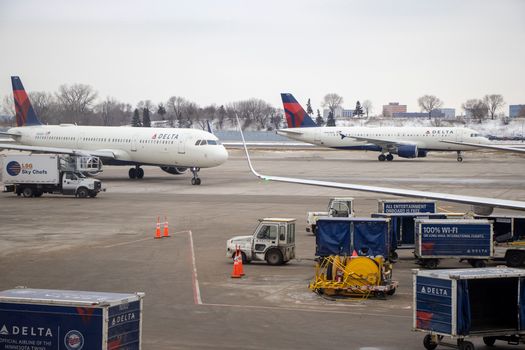
The Boeing 747 remains part of the passenger experience, even though many airlines that once operated the type have already retired it. Cargo and charter aircraft are excluded from the much smaller group relevant to ordinary travelers: in 2026, only four carriers retain commercially configured 747s for regularly scheduled passenger service. Those surviving aircraft still give travelers opportunities to book premium cabins aboard the long-serving jet.
Finding one of these business-class experiences involves more than comparing seat measurements. Each remaining passenger operator will probably begin or end its 747 services at its own hub, so the usefulness of a particular seat also depends on whether that carrier’s destinations suit the traveler’s plans. The best choice therefore combines cabin design, seat features and a workable itinerary.
Why the upper deck stands out
Business class varies substantially among the remaining aircraft, with differences in seat size, design and overall quality. The upper deck nevertheless has an architectural advantage that does not depend entirely on the seat itself. It is physically divided from the main cabin, creating a smaller premium area within the aircraft rather than another section along the full length of the passenger deck.
That upper level is also generally positioned directly above a second premium-cabin area. This arrangement gives the crew a distinct portion of the airplane to serve, instead of a lengthy cabin segment running vertically through the interior. For passengers, the separation and compact layout are what make upper-deck bookings especially appealing when privacy and personal space matter.
Where travelers can look
Korean Air remains one of the clearest possibilities for passengers seeking this experience. The country’s flag carrier, which is also its largest airline, continues to operate a fully active fleet of passenger-configured 747-8 aircraft. South Korean nationals may have particularly broad access to the remaining choices because their passports provide visa-free entry to Germany, China, Russia and South Korea.
The limited operator count makes route selection central to the booking decision. A traveler may prefer one business-class design, but that option is only useful when the airline’s hub and destination network fit the intended journey. Anyone determined to fly upstairs should confirm both the aircraft type and cabin location when comparing available services.
Efficiency changed the market
Airlines began removing the 747 from service decades ago, with American Airlines starting retirements in 1974. Its decision reflected a mismatch between the large aircraft and the carrier’s route strategy at that time. Other operators have made their own fleet choices as technology, industry expectations and available aircraft have evolved.
Fuel consumption helps explain the appeal of newer alternatives. Depending on the version, the 747-400 and 747-8 use roughly 8.83 to 12 tons of fuel during an hour of operation. The Boeing 777-300ER lowers that hourly range to about 7.35 to 7.5 tons, giving airlines a way to reduce both fuel use and operating expense. As carriers continually reassess their fleets, newer and more efficient designs have displaced many passenger 747s.
A long production legacy
Across every version, manufacturers completed 1,574 Boeing 747s during the program’s production life. The original prototype, named City of Everett, now has a permanent home at The Museum of Flight in Seattle, Washington. Pan American World Airways received the first production delivery on December 12, 1969.
That first delivered aircraft initially carried the registration N733PA and was subsequently registered as 5N-THG. After leaving service, it entered storage in California during 1992 at SBD, the code for San Bernardino International Airport. It was dismantled by the end of 1993. The contrast between that early aircraft’s fate and the four remaining passenger operators shows how rare a bookable 747 journey has become, particularly for travelers seeking the upper deck rather than simply the aircraft type.
- Only four carriers schedule passenger 747 flights in 2026.
- Korean Air operates passenger-configured Boeing 747-8 aircraft.
- 747-400 and 747-8 fuel use is approximately 8.83 to 12 tons hourly.
- Production across all 747 variants totaled 1,574 aircraft.
- Pan American World Airways received the first official delivery on December 12, 1969.
Summarized from the reporting above. Read it for the full story.
Winter weeks, altitude, and a fire at the end of the day. Tell us what the trip should feel like and we'll shape complete options you can compare.
Ask 4Vacations →
Share this story