Overnight diversions bring uneven hotel help from US airlines
Federal protections cover time on the plane and some refunds, but lodging depends largely on each carrier’s policy.

A night nobody planned
A late diversion can turn an ordinary trip into an unexpected overnight stay far from the intended destination. Whether stranded passengers receive lodging, meals or transportation depends heavily on the carrier and the reason the aircraft landed elsewhere. Federal protections address several parts of the experience, but they do not compel an airline to pay for a room or provide food after passengers leave the plane.
The practical consequences were apparent on November 7, when storms forced Alaska Airlines flight AS322 to land in Yakima instead of continuing from Dallas/Fort Worth toward Seattle. Yakima is roughly 100 miles from Seattle. A problem involving fuel then kept the flight there through the night, affecting 137 travelers. About 50 passengers slept on Red Cross cots after Alaska declined to issue hotel rooms or food vouchers because it categorized the event as weather-related.
What federal rules cover
Federal requirements offer protection while travelers remain aboard a diverted aircraft. For a domestic trip, the carrier generally must provide an opportunity to leave the plane before a tarmac wait exceeds three hours. The corresponding threshold for an international flight is four hours. During the wait, passengers must have food and water, functioning lavatories and access to medical treatment.
Refund rights may also apply when the airline substantially alters the journey. A traveler who rejects the substitute itinerary can receive a refund if the change is significant, and arriving at a different airport falls within that category. These safeguards do not extend to mandatory reimbursement for an overnight room or post-flight meals. For those benefits, travelers are largely dependent on the voluntary promises carriers publish through the DOT Airline Cancellation and Delay Dashboard.
Hotel policies differ
Among US carriers, American Airlines stands apart by specifically identifying a diversion as a circumstance that may trigger hotel assistance. Its policy applies when passengers have not boarded again by 11:59 PM, measured in local time on the day they were originally due to arrive. In qualifying situations, American may arrange an approved room or cover its cost.
That promise comes with an important qualification. American also places expenses on the passenger when the underlying delay is beyond the carrier’s control. The two provisions do not establish a straightforward outcome for a weather-driven diversion, leaving the available assistance dependent on how the disruption is classified.
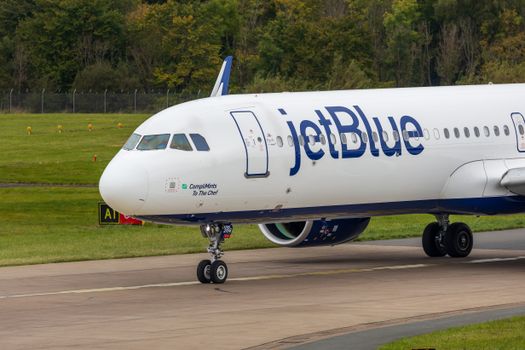
JetBlue treats diversions as part of its category of controllable interruptions. If such an event causes an overnight arrival delay of at least three hours, the carrier provides lodging. Delta Air Lines, United Airlines and Alaska Airlines use a narrower standard: hotel help is offered only for disruptions for which the airline accepts responsibility. That distinction can determine whether a traveler gets a bed or must arrange one personally.
Less help on some carriers
Policies at lower-cost airlines can provide fewer overnight benefits. Frontier Airlines counts certain diversions among controllable disruptions, yet it does not supply hotel accommodation for delayed or canceled travel. Its meal assistance begins after the disruption reaches three hours. A passenger could therefore qualify for food while still having to find and fund a room.
The Alaska incident demonstrates how responsibility rules can shape the outcome even when a trip experiences more than one problem. Storms caused the initial landing in Yakima, while the aircraft subsequently remained overnight because of the fuel-related issue. Alaska relied on the weather classification when declining both lodging and meal vouchers. No federal requirement obligated the carrier to provide either benefit.
Changes begin in 2027
The categories used to assign responsibility are due to change in January 2027 under a new DOT rule. Airlines currently record delays and cancellations with cause classifications, including an Air Carrier designation for events attributed to the airline. Reclassification of common diversion causes could alter which interruptions carriers regard as being within their control.
That matters because several hotel and meal promises depend on precisely that determination. Travelers facing an overnight diversion may receive very different treatment from one airline to another, even under broadly similar circumstances. Checking the operating carrier’s commitments, the stated cause of the disruption and any replacement itinerary is therefore central to understanding which assistance or refund options apply.
- Domestic diverted flights have a three-hour limit before passengers must be allowed off.
- The international tarmac threshold is four hours.
- American’s hotel provision uses 11:59 PM local time as its boarding cutoff.
- JetBlue lodging requires a controllable overnight arrival delay of at least three hours.
- DOT classification changes are scheduled for January 2027.
Source: Simple Flying ↗
Summarized from the reporting above. Read it for the full story.
Winter weeks, altitude, and a fire at the end of the day. Tell us what the trip should feel like and we'll shape complete options you can compare.
Ask 4Vacations →

Share this story