How Airlines Work Together Across Four Partnership Types
Interline, codeshare, alliance and joint venture agreements each connect airlines in different ways.

A spectrum of cooperation
Airline relationships do not all provide the same degree of coordination. The four main arrangements, moving from the simplest to the most involved, are interline agreements, codeshares, membership in an alliance and joint ventures. Knowing which relationship applies can help travelers understand why several airlines appear on one journey and what coordination they may provide.
These partnerships have grown more sophisticated, although that development has brought both advantages and drawbacks. Star Alliance began about 25 years ago and represented a major change in airline cooperation. SkyTeam and oneworld followed soon afterward. All three remain in existence, but global alliances have received less emphasis in recent years.
Large alliances can include many carriers with only a loose connection to one another. Airlines may therefore seek individual relationships with companies that complement their networks more closely. Those arrangements can exist independently of membership in one of the three global groups.
What interlining does
Interlining is the most basic of the four arrangements. It is a commercial relationship that lets carriers accommodate a passenger traveling with multiple airlines under one itinerary. It also makes it possible for one carrier to sell a ticket involving another, without implying that either side receives especially advantageous commercial terms.
For a traveler, the practical benefits may include having checked luggage sent onward to the final stop and receiving boarding passes covering the full journey. An interline relationship can also create the possibility of being moved to a different carrier when operations are disrupted.
Those conveniences do not mean the airlines have a broad partnership. Two carriers may support each other’s passengers at this limited level while having no deeper commercial relationship. The arrangement can even connect airlines that otherwise compete or have an unfriendly relationship.
Interline reach and limits
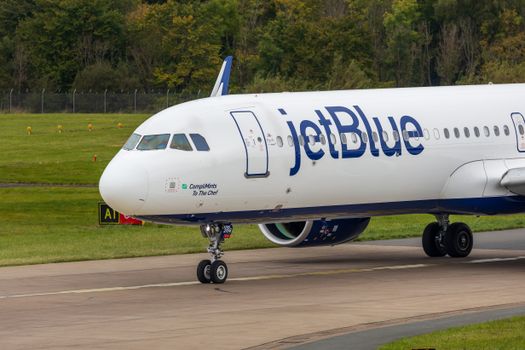
Etihad illustrates how widely an airline can use interlining without joining a leading worldwide alliance. It maintains such agreements with dozens of carriers, including American, Emirates, JetBlue, United and Qatar Airways. The variety of those names shows that interlining can serve as practical infrastructure rather than evidence of close strategic ties.
An airline can also decide that an interline relationship no longer serves its interests. Many years ago, Delta ended its arrangement with American. At least part of the reason was an imbalance during operational disruptions: American was transferring more affected passengers to Delta than Delta was sending in the opposite direction. Delta consequently concluded that continuing the agreement was not worthwhile.
Codeshares add a sales layer
A codeshare represents a step beyond interlining. Under this model, cooperating airlines place their own identifying codes on flights flown by the other carrier. The additional flight number allows an airline to sell access to a route segment it does not operate itself, helping both companies attract business through their connected networks.
Alaska Airlines and Icelandair provide an example. Icelandair serves particular gateways in the United States, while Alaska Airlines supplies connecting traffic beyond those points. A passenger can therefore assemble an itinerary using the two carriers while seeing an Icelandair identifier attached to the connecting segment.
A trip through Portland
Consider travel between Reykjavik and Los Angeles. Icelandair does not fly that route directly, but it does serve Portland. A traveler can combine that service with an Alaska Airlines flight from Portland to Los Angeles and purchase the latter segment as an Icelandair codeshare.
The flight number reveals the sales arrangement. When the booking is made through Icelandair, the Portland–Los Angeles portion also carries an Icelandair number: FI7696. The carrier physically providing the flight and the carrier whose code appears on the booking are therefore not necessarily the same.
Revenue generally remains concentrated with the company operating the aircraft. The airline selling the other carrier’s flight often receives only a small portion, rather than a major share. The larger commercial value comes from making each network easier to sell and from directing passengers into the cooperating airline’s services.
- The four levels are interline, codeshare, alliance membership and joint venture.
- Interlining can support through-checked bags, onward boarding passes and possible rebooking during disruptions.
- Etihad has interline agreements with dozens of airlines despite lacking membership in a major global alliance.
- Icelandair’s Portland-to-Los Angeles codeshare carries flight number FI7696.
- Most codeshare ticket revenue generally goes to the carrier operating the flight.
Source: One Mile at a Time ↗
Summarized from the reporting above. Read it for the full story.
Winter weeks, altitude, and a fire at the end of the day. Tell us what the trip should feel like and we'll shape complete options you can compare.
Ask 4Vacations →

Share this story