Guide to Pet-Friendly Air Travel in the US
The guide covers commercial flights, private jets, and semi-private services.
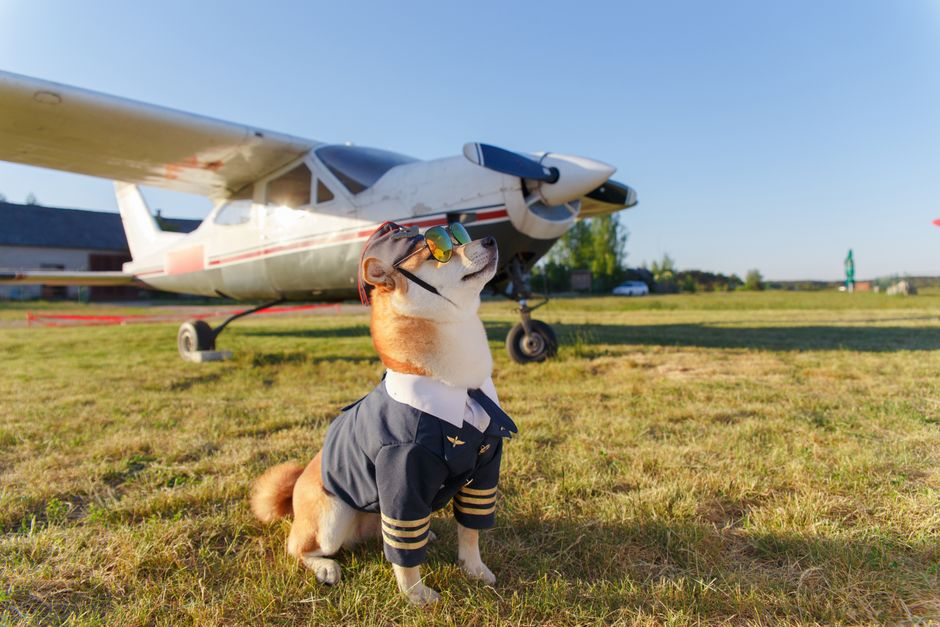
Start With Your Pet
Taking a dog or cat on a trip can spare owners the stress of arranging a kennel or finding someone dependable to provide care at home. Although airlines and other travel businesses are increasingly welcoming animals, an air journey still requires preparation. The first step is checking with a veterinarian to determine whether the animal is fit to fly. After that, travelers can begin matching the pet and the planned itinerary with a suitable carrier.
That comparison should account for the animal’s species, breed, weight, disposition, and destination. Owners also need to decide whether keeping the pet nearby is essential or whether traveling in the aircraft’s hold is acceptable. Rules for companion animals can differ substantially among carriers, and they are distinct from arrangements for service animals. The most suitable flight is ultimately the one whose requirements can be met without compromising the animal’s comfort or safety.
Commercial Airline Requirements
Each commercial carrier establishes its own conditions for accepting pets. Policies may determine which kinds of animals are eligible, where they can be transported aboard the aircraft, and the maximum dimensions or weight allowed. Airlines can also specify the carrier design and impose a charge for each journey. Because restrictions and prices may change, travelers should confirm the current terms for their particular route before purchasing a ticket.
Cabin travel on most US commercial airlines is mainly practical for small dogs and cats. The animal generally must stay inside an airline-approved carrier placed beneath the seat ahead of its owner. Limits may apply to the pet, the carrier, or their combined measurements and weight. Those conditions leave very few cabin choices for a dog weighing 40 pounds. Depending on the destination, an owner may also have to obtain documents from a veterinarian, proof concerning the animal’s health, or additional required records before departure.
Charges depend on the carrier, itinerary, and whether the animal rides with its owner or travels as cargo. For a pet accepted in the passenger cabin, a typical one-direction commercial-airline charge is roughly $100 to $150. Since cost is only one part of the decision, owners should examine eligibility, onboard placement, carrier specifications, and paperwork requirements alongside the fare.
More Room In Cabin
Travelers with larger dogs may find additional cabin possibilities by considering higher-priced semi-private services. Bark Air, K9 Jets, and JSX generally permit heavier animals to remain with their owners rather than being placed in the hold. These services have different thresholds, so the dog’s exact weight still matters when comparing them.
Bark Air does not impose a size limit. Under K9 Jets’ rules, one traveler may take a single animal above 51 pounds. Alternatively, that passenger may bring two animals when each weighs under 50 pounds. JSX accepts dogs below 80 pounds. These arrangements can be particularly relevant to owners whose dogs cannot satisfy the under-seat conditions commonly used by commercial carriers. A private jet is another category owners can consider when deciding how they want an animal accommodated during a flight.
Putting Risk In Perspective
The latest US Department of Transportation figures cover 2025, when US carriers moved 117,861 animals. Among them, three died, seven sustained injuries, and one went missing. Across the full year, that produced an incident rate of 0.76 for every 10,000 animals transported. The figures indicate that severe outcomes occurred infrequently, while still leaving owners to judge whether flying is appropriate for their particular pet.
No single airline or flight category will be the right answer for every animal. A small cat that meets an under-seat requirement presents a different booking problem from a 40-pound dog whose commercial cabin choices are scarce. The decision should bring together the route, current airline conditions, fees, documentation, animal type and size, and preferred onboard arrangement. Comparing those details before booking gives travelers a clearer view of whether a commercial flight, semi-private service, or private aircraft best fits the journey.
- Commercial cabin pet fees commonly run about $100 to $150 each way.
- US airlines transported 117,861 animals during 2025.
- The 2025 incident rate was 0.76 per 10,000 transported animals.
- JSX permits dogs weighing less than 80 pounds.
- Bark Air has no pet size restriction.
Summarized from the reporting above. Read it for the full story.
Winter weeks, altitude, and a fire at the end of the day. Tell us what the trip should feel like and we'll shape complete options you can compare.
Ask 4Vacations →

Share this story