Emirates A380 Premium Economy Gains Edge on Europe-Dubai Routes
Passengers see it as a comfortable middle ground worth paying more for.
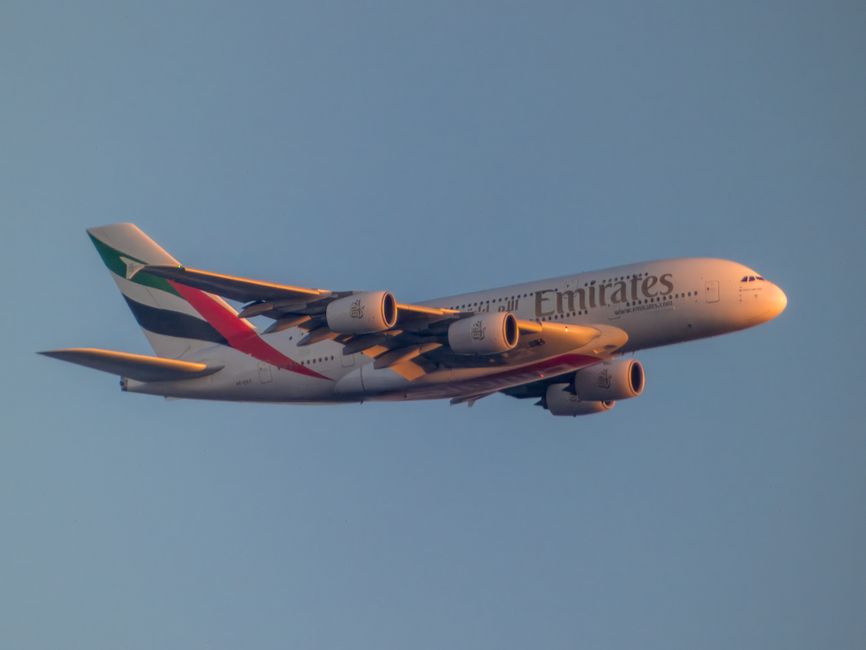
A distinctive middle cabin
Emirates is turning premium economy into a central element of its network rather than treating it as a niche upgrade. The airline is unusual among the Middle East’s three largest carriers because neither Etihad Airways nor Qatar Airways has introduced the cabin. Emirates, by contrast, is expanding it across the existing fleet and including it aboard every newly delivered widebody.
That strategy fits the carrier’s broader emphasis on higher-end seating. First class appears on nearly every Emirates aircraft, while its extensive Airbus A380 operation adds substantial business capacity. Many of those double-deck aircraft carry 76 business seats. Premium economy now gives the airline another way to serve passengers who want more than the essentials of economy without moving into business class. Its advantages become more meaningful as time aboard increases, making longer journeys particularly suitable for the product.
Europe takes priority
Premium economy-equipped A380s are being assigned to prominent services across North America, Asia and Europe, with European routes receiving particular attention. Europe accounts for a major share of Emirates’ activity because its Dubai hub occupies a central position for those journeys.
Travel between Europe and the Middle East appears especially well matched to the cabin. Passengers get a noticeably upgraded experience over regular economy, while avoiding the much larger step into business class. That balance is helping premium economy establish itself as an attractive paid upgrade on services connecting Europe with Dubai.
Comfort beyond extra space
Every Emirates aircraft offering the cabin uses the Recaro PL3530. The model also serves in some short-haul business cabins, although it is broadly considered a conventional premium economy seat. Emirates gives each row 40 inches, or 101.6 centimeters, of pitch, which is above average. Seating runs seven across on the A350 and the A380’s upper deck, while the 777 and lower-deck A380 installations place eight passengers across each row.
The entertainment display is approximately comparable in size to the screen provided in Emirates economy. Greater recline creates a more substantial physical difference between the cabins. The experience also extends beyond the seat: meals come on china with metal utensils, and catering follows a seasonally changing menu shaped by regional ideas. The beverage selection is broader, with certain wines also poured in business class. On boarding, passengers receive sustainable amenity pouches holding skincare products and travel necessities.
Premium economy sections are smaller than economy cabins, which can allow the crew to provide more attentive service. Together, the added pitch, stronger recline, enhanced dining and upgraded amenities create a level of refinement that is distinct from standard economy.
Expansion across the fleet
The Airbus A350-900 became the first Emirates aircraft type whose entire group includes premium economy, since deliveries began after the product’s introduction. Depending on configuration, an A350 carries 21 or 28 places in this cabin. Emirates has also completed work on every Boeing 777-200LR, installing 24 premium economy seats per aircraft.
Retrofitting continues on the larger Boeing 777-300ER fleet. Emirates intends to add the cabin to 71 of those jets, and 43 had been completed when the source material was written. Each refurbished example has 24 seats in an eight-across arrangement. The type remains the airline’s fleet backbone, with 117 aircraft in operation.
More than 50 aircraft from Emirates’ 116-strong A380 fleet have received premium economy. That total includes 50 standard-layout A380s equipped with first class. Most place the new cabin on the main deck. One aircraft instead uses a revised high-density design, positioning 56 premium economy seats upstairs in space otherwise used for first class. Although described as high-density, that version holds 569 passengers rather than 615 and increases business-class seating from 58 to 76. The scale of these changes shows how firmly Emirates is building the middle cabin into its best-known aircraft and its wider network.
- A380 premium economy provides 40 inches of seat pitch.
- More than 50 of Emirates’ 116 A380s have been retrofitted.
- Emirates plans premium economy upgrades for 71 Boeing 777-300ERs.
- The revised A380 layout carries 56 premium economy seats upstairs.
- Europe is a priority region for premium economy-equipped A380 services.
Source: Simple Flying ↗
Summarized from the reporting above. Read it for the full story.
Winter weeks, altitude, and a fire at the end of the day. Tell us what the trip should feel like and we'll shape complete options you can compare.
Ask 4Vacations →

Share this story