8 Everyday Foot Habits Podiatrists Warn About
Small daily routines can add up to serious foot pain, according to foot doctors.
Daily footwear choices can gradually affect comfort and mobility. Bill McCann, D.P.M., says athletic shoes may lose cushioning and stability after a few hundred miles even when their exteriors still look usable. Worn tread also reduces grip, Saylee Tulpule, D.P.M., notes. The specialists recommend replacing athletic footwear after 300–500 miles or within a year and alternating pairs so compressed foam has time to recover.
New foot pain can also become more disruptive when dismissed. Suzanne Fuchs, D.P.M., says changing how weight is carried or adjusting one’s stride may spread discomfort to the opposite foot, knees, hips, or lower back. An early case of plantar fasciitis might improve within weeks, while an overlooked case can become persistent and may include a heel spur or partial tear. Her suggested first measures include supportive footwear, calf stretches, ice, and modified activity, followed by a podiatry evaluation if clear improvement has not occurred after two weeks.
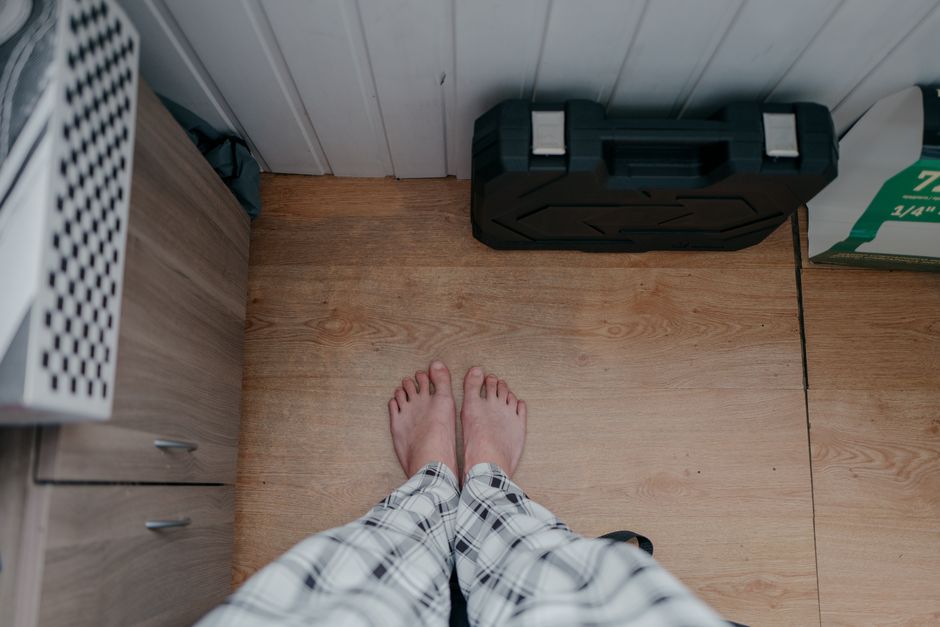
Regular visual checks can reveal discoloration, lesions, substantial calluses, or ingrown toenails before problems worsen. Fuchs says these checks are particularly important for people with diabetes or neuropathy. Other risks come from walking barefoot: hard household floors provide little shock absorption, while pool decks, gym locker rooms, and hotel showers can expose feet to athlete’s foot, fungus, or bacterial infection. Supportive indoor footwear and waterproof shower shoes provide protection in those settings.
Heels above three inches concentrate balance on the front of the foot, increasing the possibility of an ankle sprain. They may also strain the calves and contribute to knee, hip, or back pain. Narrow toe areas are associated with bunions, hammertoes, neuromas, and corns. Tulpule favors heels no higher than three inches, with a block base, ankle straps, and a rounded toe area. Fuchs also identifies tight calves as an often-overlooked source of foot pain because they pull on the heels and increase strain on the plantar fascia.
- Replace athletic footwear after 300–500 miles or at least yearly.
- Seek a podiatry evaluation if new pain shows no clear improvement after two weeks.
- Inspect feet a couple of times each week.
- Daily checks are especially important for people with diabetes or neuropathy.
- Choose heels no higher than three inches.
Summarized from the reporting above. Read it for the full story.

Our one-page guide to chair height, screen height and where your feet go. Free at the front desk or by request.
A five-minute check of your everyday posture at your desk, in the car, and on your feet. No obligation, no pressure.
Reserve a spot →

Share this story