What U.S. Travelers Can Claim After Flight Disruptions
Refund rules cover major delays, canceled flights, mishandled bags, and paid services airlines fail to provide.
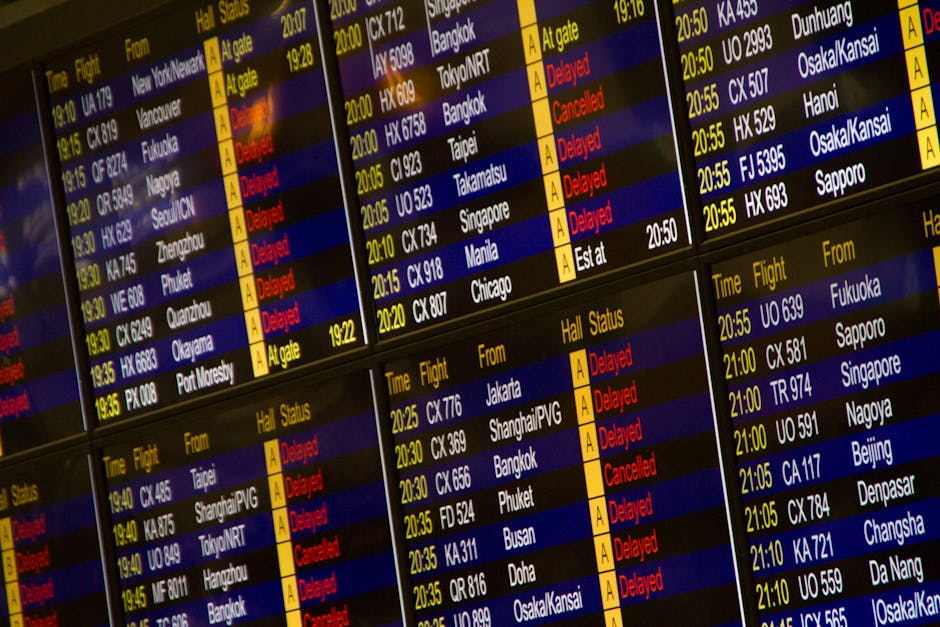
When refunds apply
Federal protections cover passengers whose airlines cancel a flight, delay it substantially, or make another major change to the itinerary. The rules have applied since 2024 to every airline operating flights within the US or flying into or out of the country. The reason for the disruption does not remove this protection, so weather-related cancellations and qualifying delays are included alongside problems involving airline systems or air traffic control equipment.
A domestic delay becomes eligible once it exceeds three hours. For an international journey, the corresponding threshold is more than six hours. A two-hour delay does not create a federal right to compensation in the US, although an airline may voluntarily provide a meal credit, travel voucher, or another form of assistance. Such gestures depend on the carrier rather than the federal refund requirement.
The choice travelers face
Eligibility for money back depends on what the passenger does after the disruption. Airlines frequently place affected customers on another departure, sometimes later that day or on the next day. A traveler who accepts that replacement itinerary gives up the automatic refund associated with the canceled or substantially altered flight. The same principle applies when a customer agrees to a revised schedule or takes a voucher instead.
To preserve the refund, the passenger must decline the substitute booking, reject the changed itinerary, and refuse alternative compensation such as a travel credit. Once the traveler has rejected the offered replacement, the airline is supposed to process the refund automatically. The customer should not need to make a separate request or complete additional procedural steps to obtain it. This distinction matters for anyone deciding between continuing the journey and recovering the ticket cost: the federal rule does not provide both options at once.
What gets returned
The amount due covers the unused part of the fare, together with the associated taxes and fees. If part of the ticket has already been used, that portion may be deducted. The original method of payment determines how quickly the money should arrive. Purchases charged to a credit card have a deadline of seven business days, while refunds involving other payment methods are due within 20 calendar days.
Paid add-ons are also refundable when the airline does not supply them. Examples include a reserved seat assignment, onboard internet access, and entertainment purchased for the trip. These protections allow passengers to recover charges for services that never materialized, even when the underlying flight itself was operated.
Delayed baggage
A flight can arrive as planned while a checked bag does not. In that situation, the baggage charge becomes refundable if the luggage is not delivered within the applicable window. Following a domestic arrival, that window is 12 hours. International trips use a range of 15 to 30 hours, with the precise period determined by the route’s length.
The traveler has to report the baggage problem to the airline. That record is a condition of receiving the baggage-fee refund, so documenting the delay is an important step before the delivery deadline passes. The protection concerns the fee paid to check the luggage and is separate from any refund connected to a canceled or heavily delayed flight.
Health related credits
A different protection can apply when travel is medically inadvisable because of a serious communicable disease. Qualifying customers may receive a voucher or credit rather than a cash refund. Its validity must extend for at least five years, giving the traveler a longer period in which to use the value.
This option can require medical records supporting the health-related reason for not traveling. The passenger may also need to cancel before the scheduled departure. Because these conditions differ from the rules for canceled flights and major delays, travelers seeking this form of relief should address the cancellation and documentation before the trip begins.
- Domestic delays qualify after more than three hours.
- International delays qualify after more than six hours.
- Credit-card refunds are due within seven business days.
- Other payment methods carry a 20-calendar-day refund deadline.
- Health-related credits must remain valid for at least five years.
Summarized from the reporting above. Read it for the full story.
Winter weeks, altitude, and a fire at the end of the day. Tell us what the trip should feel like and we'll shape complete options you can compare.
Ask 4Vacations →


Share this story