New DOT Rule Changes Blame for 10 Flight Delays
The delays will no longer be blamed on airlines under the new rule.
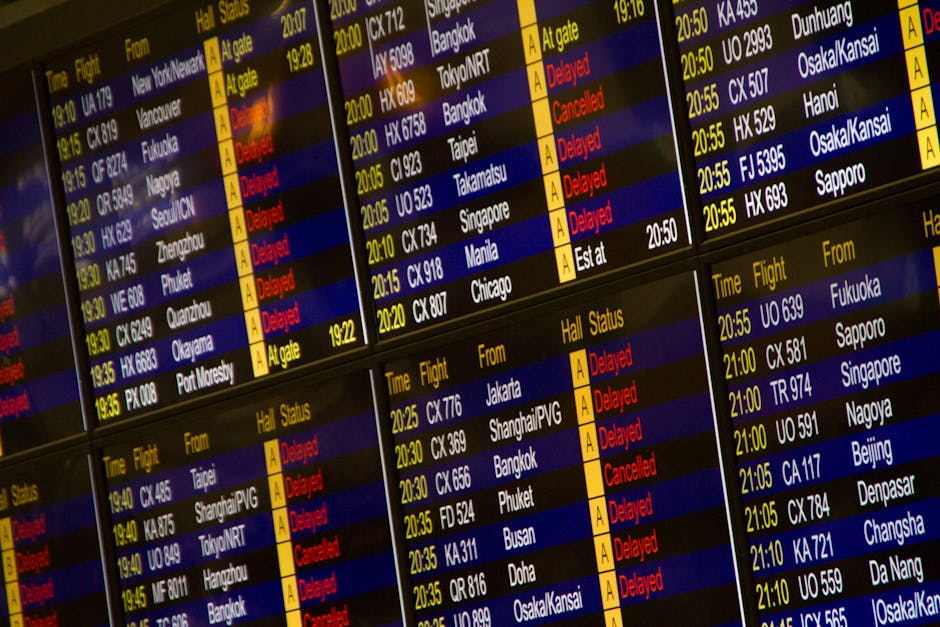
A narrower definition of responsibility
A Department of Transportation rule will change how airlines classify 10 kinds of cancellations and delays. Beginning February 1, 2027, those disruptions will no longer be treated as events caused by carriers when airlines submit their explanations for interrupted flights. The change could also determine whether stranded passengers receive meals, lodging, or other help.
Congress required this revision through the FAA Reauthorization Act of 2024. The DOT is implementing that direction by narrowing the circumstances considered to be under an airline’s control. Because carrier commitments generally apply only to controllable disruptions, reclassification can affect passengers directly rather than merely changing a reporting label.
The DOT expects the overall worth of compensation and amenities given to travelers by carriers to decline after the rule begins. A delay may still appear connected to airline operations while falling outside the categories that activate a carrier’s customer-service promises.
The assistance at stake
Current policies offer limited protection when a carrier is responsible for a major delay or cancellation. For disruptions exceeding three hours, problems involving maintenance or crews can qualify as controllable circumstances. In such cases, the 10 largest U.S. airlines have made enforceable commitments through their customer-service plans to provide certain forms of assistance.
Depending on the carrier and the circumstances, that assistance can include a voucher for food or lodging for an overnight interruption. A mechanical issue that keeps a flight grounded through the night, for example, will probably lead to a hotel room under current practices. Once the revised classifications take effect, the same expectation may not always hold.
Weather delays were already outside these commitments. Severe winter storms can lead to widespread cancellations, but airlines do not have an obligation to compensate passengers for weather-related disruption. The new rule leaves that existing boundary in place while removing 10 additional situations from the airline-responsibility category.
One unusual example
Necessary cleaning of an aircraft cabin following a passenger’s death is among the disruptions being reclassified. After February 1, 2027, a traveler delayed for that reason will no longer qualify for compensation on the basis that the event was within the airline’s control.
The revision reflects Congress’s instruction that carriers should not be assigned fault for the affected categories when identifying why a flight was late or canceled. Aviation attorney Mark Dombroff said the approach acknowledges that airlines should not face penalties when those events occur. Dombroff is a partner at Fox Rothschild LLP, which represents multiple airlines.
The shift does not eliminate every circumstance in which a carrier must assist passengers. Cancellations and significant delays that remain classified as controllable can still trigger the commitments contained in airline service plans. The crucial practical question will be the reason assigned to each disrupted flight.
How travelers can prepare
Passengers should ask the carrier to identify the stated cause of a cancellation or delay and preserve that explanation. A written response is useful, as is a screenshot showing the notification within an airline’s app. Travelers should also retain receipts from expenses incurred during the disruption and compare the situation with the promises in the carrier’s customer-service plan.
Information from a gate agent should not be the only reference. The DOT operates an Airline Cancellation and Delay Dashboard that gathers the services airlines have pledged to provide when a controllable event inconveniences passengers. The dashboard will probably be revised so its information reflects the new classifications.
The effective date was initially October 19, 2026. Airlines for America, which represents major airlines in the country, sought a postponement until February. Moving implementation to February 1, 2027, gives the Bureau of Transportation Statistics and airline-industry participants additional time to revise technical systems and the procedures used to report disruption categories. Until then, existing classifications and carrier commitments remain the relevant guide for travelers seeking assistance.
- The revised classifications take effect February 1, 2027.
- Ten disruption types will no longer count as airlines’ fault.
- The original start date was October 19, 2026.
- Delays exceeding three hours can qualify as significant.
- Keep written delay explanations, app screenshots, and expense receipts.
Summarized from the reporting above. Read it for the full story.
Winter weeks, altitude, and a fire at the end of the day. Tell us what the trip should feel like and we'll shape complete options you can compare.
Ask 4Vacations →
Share this story