Five Exercises Support Easier Stair Trips for Seniors
The routine focuses on leg strength and steadiness for moving between floors.
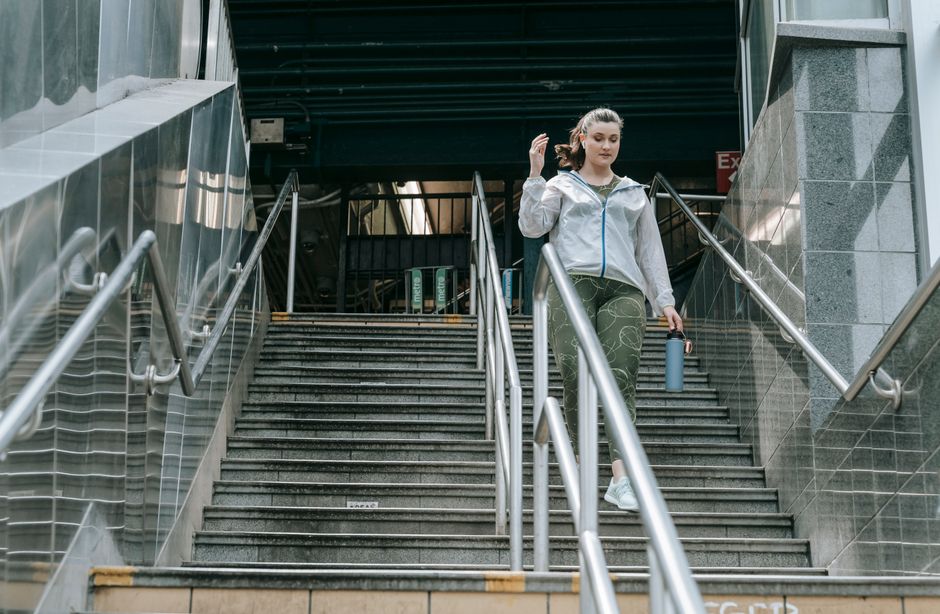
Everyday stair climbing requires several muscles and a brief period of balancing on one leg. Ales Ulishchenko, founder of MindBodyFace, explains that the quads and glutes raise the body, the calves provide the upward push, and balance supports each single-leg moment. Descending can be more difficult because the front thigh muscles must slow and control the body.
Ulishchenko, who practices licensed osteopathy in Dubai and has experience in orthopedic surgery and musculoskeletal rehabilitation, recommends five movements for older adults. The routine includes controlled practice of the stair motion, step-ups, heel taps, calf strengthening and a single-leg stance. Together, the exercises develop lifting power, controlled downward movement, ankle stability and balance. For heel taps, a smaller step or a shorter lowering distance can make the movement more manageable.
The routine is scheduled two to three times weekly, leaving a rest day between sessions. Each exercise begins with one set and can progress to three. Most movements use 8-10 repetitions or 8 on each side; the single-leg stance lasts 5-10 seconds per leg. Rest is 60 seconds between sets, with more time if needed. A sturdy counter or handrail can support standing movements, while step-ups and heel taps require a low, stable step. Ulishchenko says sharp joint pain is a reason to stop. People with dizziness, a history of falls or a recent joint replacement should consult a doctor or physical therapist before beginning.
- Complete the routine two to three times weekly, with a rest day between sessions.
- Begin with one set and gradually increase to three sets.
- Rest 60 seconds between sets, or longer when needed.
- Most exercises use 8-10 repetitions or 8 per side.
- Hold the single-leg stance for 5-10 seconds per leg.
Source: Fit&Well ↗
Summarized from the reporting above. Read it for the full story.

Our one-page guide to chair height, screen height and where your feet go. Free at the front desk or by request.
A five-minute check of your everyday posture at your desk, in the car, and on your feet. No obligation, no pressure.
Reserve a spot →


Share this story