CPR training prepares bystanders for cardiac arrest
Most cardiac arrests outside hospitals happen at home, where immediate help often depends on someone nearby.
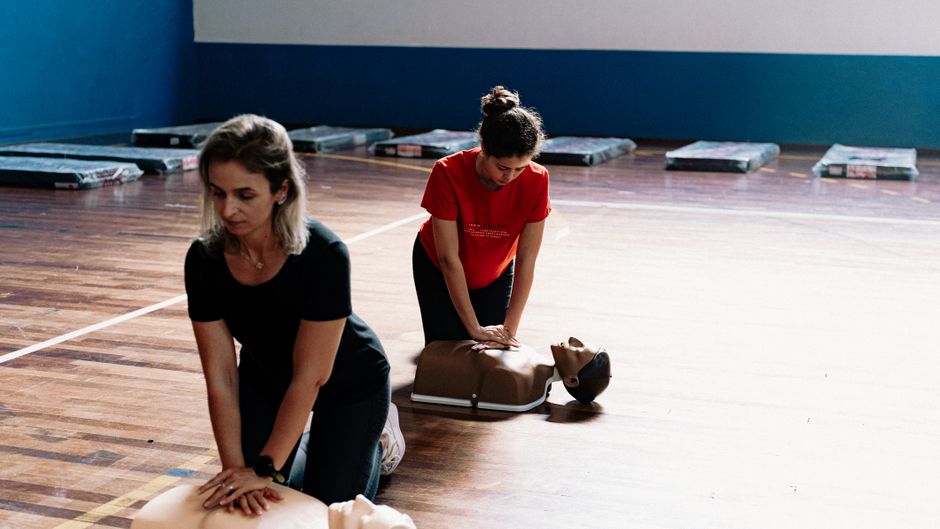
More than 350,000 cardiac arrests occur beyond U.S. hospitals each year, and about 90% are fatal. Three in four happen at home. That often leaves relatives or other bystanders providing the first aid before emergency crews arrive. CPR keeps some blood moving toward the brain and other organs during the wait. Starting quickly matters: one study found the best survival outcomes when CPR began within two minutes.
If someone cannot be awakened and is not breathing normally, the emergency response is to contact 911 and start CPR. For a teen or adult who suddenly collapses, Hands-Only CPR uses firm, rapid chest presses. Infants and children need compressions plus breaths because their cardiac arrests often begin with breathing trouble. An automated external defibrillator can analyze dangerous rhythms and guide an untrained user with spoken or visual prompts, including whether to deliver a shock.
A class gives participants supervised practice with CPR and an AED trainer. It can also cover techniques for different ages and build familiarity with the pressure needed for useful compressions. Course requirements vary for jobs and professional licenses, so some participants need a qualifying completion card. Good Samaritan statutes provide legal protection for people who assist honestly during an emergency.
- Immediate CPR may double or triple the likelihood of survival.
- Fewer than half of these patients receive CPR from a bystander.
- Bystanders use an AED in only about 12% of public cardiac arrests.
Summarized from the reporting above. Read it for the full story.

Our one-page guide to chair height, screen height and where your feet go. Free at the front desk or by request.
A first consultation is free for new patients, including a take-home handout of that day's stretches.
Book a first visit →

Share this story